What is the global market environment for control arms?
- Share
- Issue Time
- Dec 22,2025
Global Market Environment for Automotive Control Arms
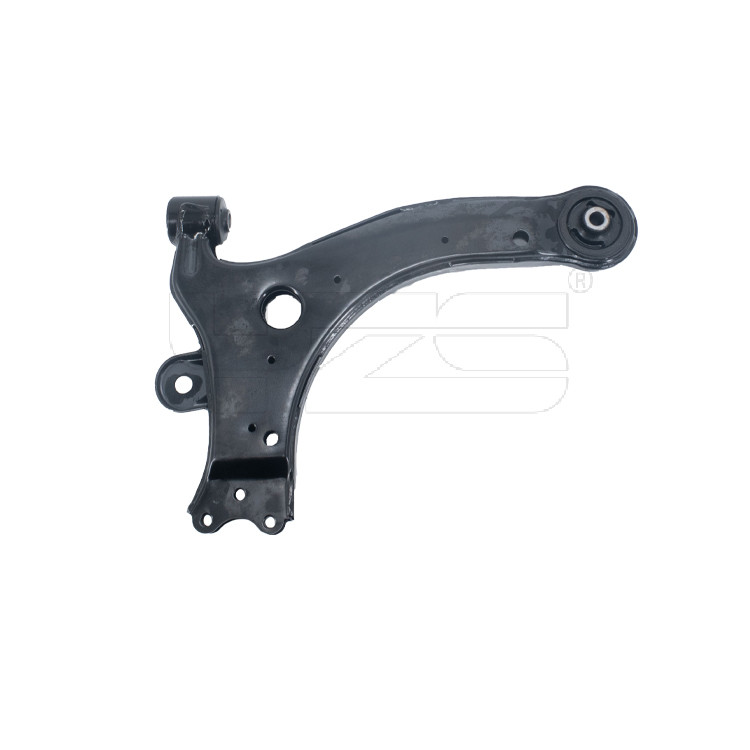
The control arm (or A-arm, wishbone) is a critical component of a vehicle's suspension system, acting as the pivotal link between the chassis and the wheel hub. The global market for control arms is a substantial segment within the automotive suspension sector, characterized by the following dynamics:
1. Key Market Drivers
Vehicle Production and Parc Growth: The primary driver is the overall production of new vehicles (OE market) and the size of the existing vehicle fleet (aftermarket). Growth in emerging economies, particularly in the Asia-Pacific region (led by China and India), directly fuels demand.
Shift Towards SUVs, Crossovers, and Light Trucks: These heavier vehicles exert more stress on suspension components and often use more complex multi-link setups, requiring more control arms per vehicle and increasing the value per unit.
Rising Demand for Safety and Comfort: Consumers and regulators demand better handling, stability, and ride quality. High-performance control arms with improved geometry and materials are key to meeting these expectations.
Growth of the Automotive Aftermarket: As the global vehicle fleet ages, the replacement market for wear-and-tear parts like control arms (especially bushings and ball joints) becomes a massive and stable revenue stream.
2. Major Market Challenges & Constraints
Intense Cost Pressure: The market is highly competitive, with significant pressure from vehicle manufacturers (OEMs) to reduce costs. This squeezes margins for suppliers.
Raw Material Price Volatility: Control arms are primarily made from forged or stamped steel or aluminum. Fluctuations in the prices of these metals and energy costs directly impact profitability.
Consolidation and Competition: The market features large, global Tier-1 suppliers (like ZF Friedrichshafen, ThyssenKrupp, Magna, and Yorozu) competing with numerous lower-cost manufacturers, particularly from Asia.
Supply Chain Complexity: Modern control arms are often integrated assemblies with pre-pressed bushings and ball joints, requiring sophisticated manufacturing and a resilient, multi-tiered supply chain vulnerable to disruptions.
3. Defining Market Trends
Lightweighting: To improve fuel efficiency and EV range, there is a strong shift from traditional steel to lightweight aluminum or advanced high-strength steel (AHSS) control arms, though at a higher cost.
Electrification of Vehicles (EVs): EVs present unique opportunities and challenges:
Heavier Batteries: Increase vehicle weight, demanding more robust suspension components.
Packaging Constraints: The need to protect underfloor battery packs can influence control arm design and packaging.
Performance Potential: The low center of gravity in EVs, combined with precise control arms, can enhance handling characteristics.
Product Sophistication & Integration: Control arms are increasingly seen as part of integrated corner modules or smart suspension systems. The development of active suspension and adaptive damping places higher performance demands on control arm design and precision.
4. Regional Landscape
Asia-Pacific: The dominant and fastest-growing market, driven by massive vehicle production in China, India, Japan, and South Korea. It is a hub for both OE manufacturing and a vast, price-sensitive aftermarket.
North America & Europe: Mature but high-value markets. Demand is driven by a large fleet of pickup trucks/SUVs (in North America) and premium vehicles (in Europe), along with stringent safety norms. The aftermarket in these regions is significant and demands high-quality parts.
Rest of the World: Regions like South America, the Middle East, and Africa represent growing aftermarket opportunities, often with demand for durable, cost-effective solutions suitable for rough road conditions.
In summary, the global control arm market is a large, competitive, and essential sector that is evolving. It is being pushed by the cyclical forces of vehicle production and the structural trends of electrification, lightweighting, and increased vehicle sophistication. Success depends on a supplier's ability to balance cost, weight, performance, and resilience in a complex global supply chain.