Why Do Sway Bar End-Link Connection Points Have Different Shapes?
- Share
- Issue Time
- Jan 12,2026
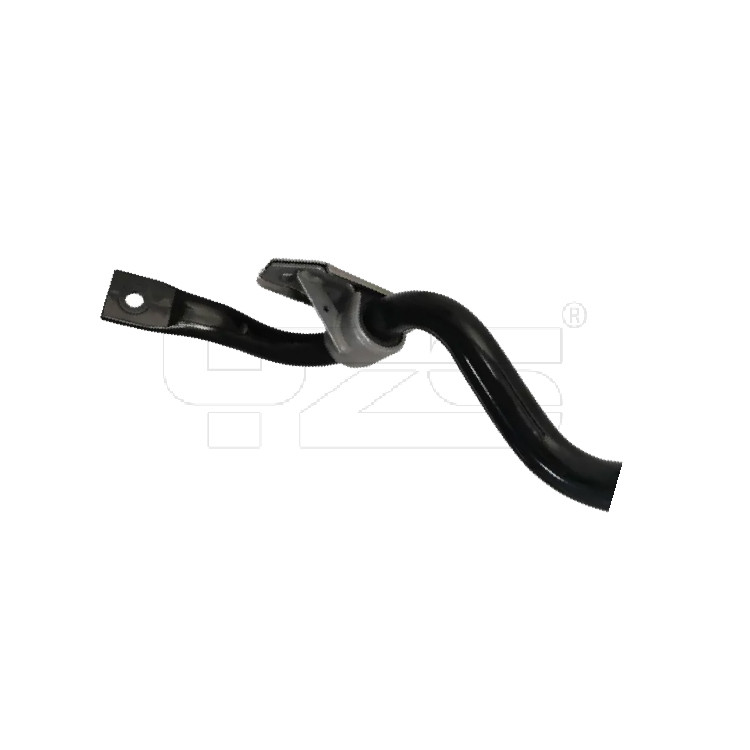
The shape of a sway bar's ends (where it connects to the end links) is primarily dictated by the type of end link used and the specific packaging, durability, and performance requirements of the vehicle's suspension system. There is no single "best" shape; each design serves a particular purpose.
Here are the most common shapes and their reasons:
1. Straight or Tapped Hole (Eyelet Type)
Shape: A straight end with a hole drilled through it, or a threaded hole (tap).
Reason: This is the most common design for OE (Original Equipment) applications on street vehicles. It connects to a simple, rubber-bushed end link with a bolt.
Advantages:
Cost-effective and simple to manufacture.
The rubber bushing in the end link isolates noise, vibration, and harshness (NVH), providing a comfortable ride.
Allows for a small amount of misalignment during suspension travel.
Trade-off: The rubber bushing can deflect slightly under extreme load, leading to a very small amount of "compliance" or less-than-instantaneous response in performance driving.
2. "T" or "Clevis" End
Shape: Resembles the letter T or a U-shaped fork (clevis).
Reason: This design is standard for performance and racing applications, and common on many aftermarket sway bars. It accepts a heim joint (spherical rod end) on the end link.
Advantages:
Provides a pure, rigid, and frictionless connection. The spherical joint allows for multi-axis articulation without bind.
Eliminates bushing deflection, resulting in immediate and precise transfer of force from the bar to the suspension. This gives the driver sharper handling feedback.
Extremely durable under high stress.
Trade-offs:
Transmits more road noise and vibration into the chassis (harsher ride).
Spherical joints require maintenance (re-greasing) and can wear out faster on daily-driven cars exposed to dirt and moisture.
3. Bent or Angled End (Offset)
Shape: The final portion of the sway bar end is bent at a specific angle.
Reason: This is almost always a packaging solution. Suspension components are densely packed. The bend is necessary to:
Clear other parts like control arms, CV axles, or the vehicle's frame/subframe.
Properly position the end link so it operates within its optimal range of motion, preventing binding or premature failure.
Achieve the desired motion ratio (the leverage the bar has on the suspension).