The Industrial Manufacturing Process of a Sway Bar Link
- Share
- Issue Time
- Jan 26,2026
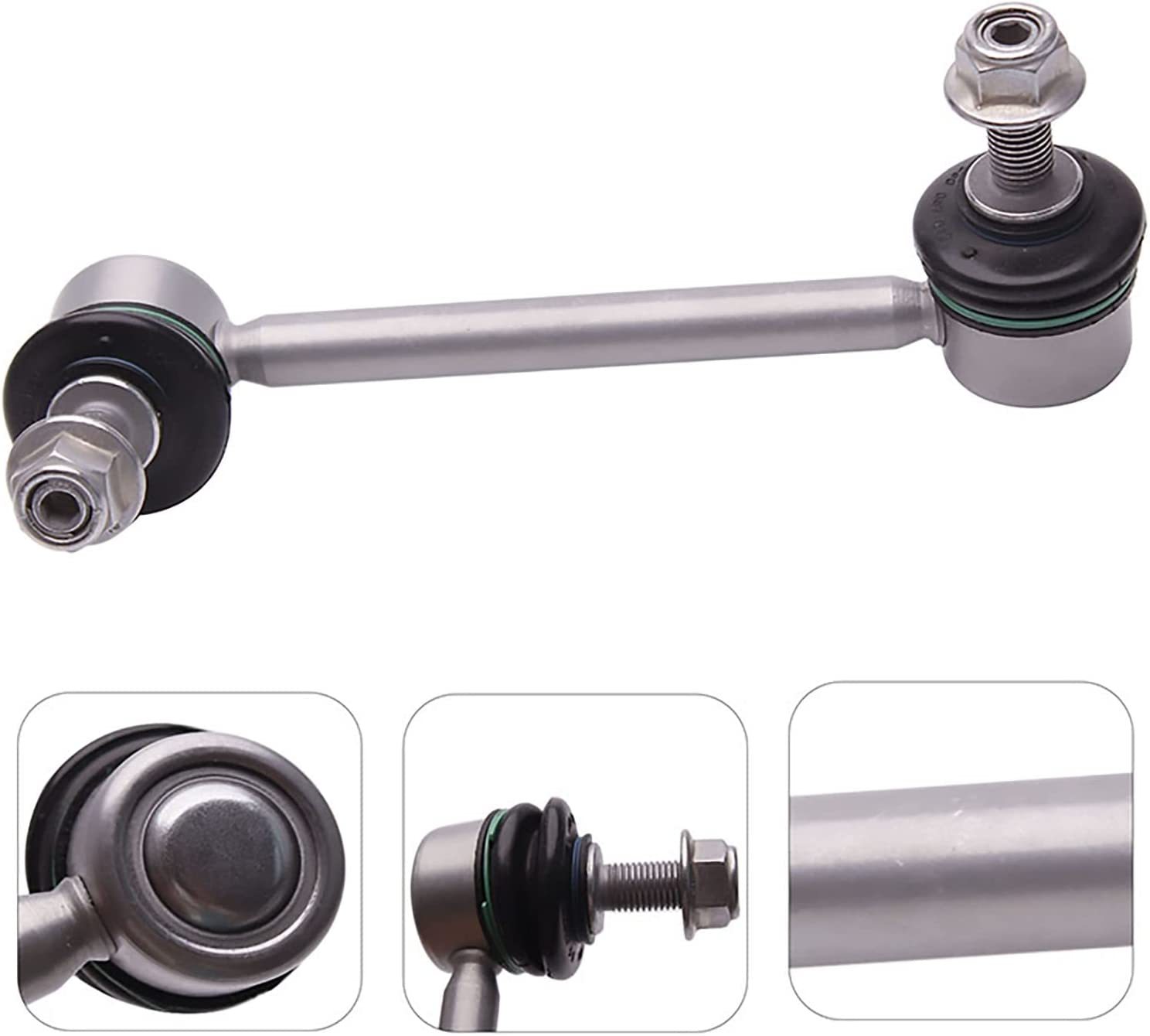
The production of sway bar links is a precision high-volume manufacturing process, combining metal forming, machining, and assembly. It emphasizes durability, strength, and consistent quality to withstand constant stress and vibration. Here is a typical step-by-step breakdown:
1. 原材料准备与成型
Material Selection: The primary material is high-strength, medium-carbon steel (e.g., SAE 1045 or similar) for the rod/stud, chosen for its excellent tensile strength and fatigue resistance. Rubber (for bushings) or polyurethane and high-grade ball joints are sourced separately.
Forging / Cold Heading: The steel rod is cut to length. The ends are then cold forged or hot forged to form the basic shapes of the threaded studs and the “eye” or “ball socket” housings. This forging process aligns the metal grain structure, creating parts that are stronger than those made by simple machining.
2. 机械加工
Machining: The forged blanks undergo CNC machining for precision.
Threads are precisely cut or rolled onto the stud ends.
The ball joint socket is machined to exact specifications.
Surfaces for bushings or retention features are finished.
Heat Treatment: The critical metal components (especially the stud) undergo heat treatment (quenching and tempering). This process dramatically increases their hardness and fatigue strength, which is essential for surviving millions of stress cycles.
3. 表面处理
Cleaning & Phosphating: Parts are cleaned and often go through a phosphate coating process (e.g., zinc phosphate). This creates a micro-crystalline layer that:
Improves corrosion resistance.
Provides an excellent base for paint adhesion.
Painting / Plating: A final protective layer is applied, typically via electrocoating (E-coat) for excellent coverage and corrosion protection. Threads may be treated with a wax-based anti-seize compound or left clean for precise torque application.
4. 部件组装
This is the core assembly stage where sub-components come together:
Ball Joint Assembly: The machined ball (made of hardened steel) is inserted into its socket. A high-performance, grease-filled polymer bearing liner is placed around it. The socket is then swaged (crimped) or closed with a staked retainer, permanently encapsulating the ball while allowing smooth rotation. A rubber or thermoplastic boot is installed and clamped to keep grease in and contaminants out.
Bushing Installation: For link designs that use them, rubber or polyurethane bushings are pressed onto the stud or into the eyelets.
Nut & Fastener Attachment: Locknuts, self-locking nuts, or other retaining hardware are pre-assembled onto the threads.
5. 质量控制与测试
Dimensional Inspection: Statistical Process Control and coordinate measuring machines verify critical dimensions.
Functional Testing: Samples from each batch undergo rigorous tests:
Torque-To-Yield Test: Ensures the stud can withstand specified torque without failing.
Fatigue (Durability) Test: The link is mounted on a test rig and subjected to millions of cyclic loads, simulating years of driving stress.
Ball Joint Breakaway & Rotational Torque Test: Measures the force required to start moving the ball joint and the smoothness of its rotation.
6. 包装与出货
Approved links are packaged in pairs, often with protective caps on the threads.
They are boxed, palletized, and shipped directly to Automotive Assembly Plants (OEM) or to the Aftermarket distribution network (auto parts stores).