Why Are There Different Types of Sway Bar Links?
- Share
- Issue Time
- Mar 9,2026
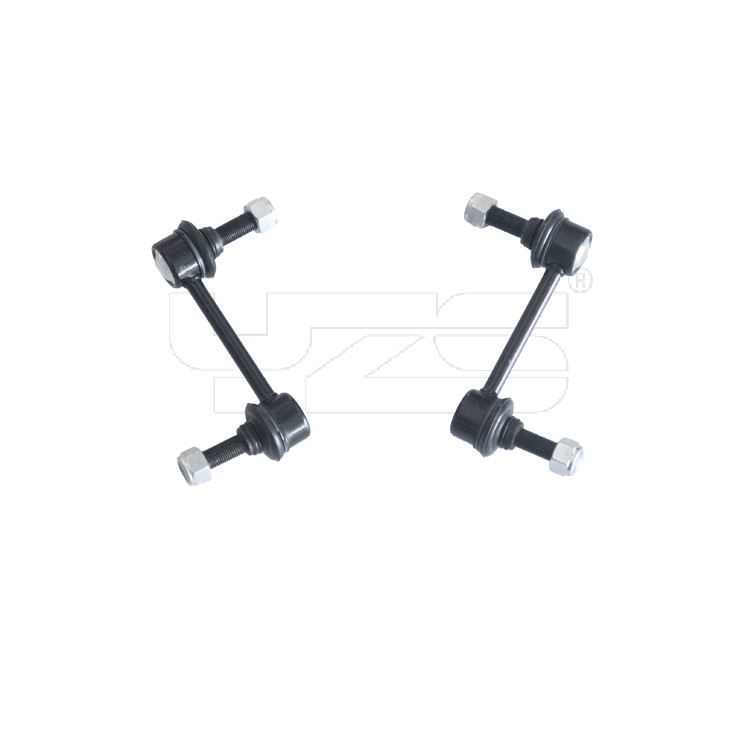
Why Are There Different Types of Sway Bar Links?
Sway bar links (also called anti-roll bar links) connect the sway bar to the suspension. There are different types mainly for vehicle design, performance, durability, and space.
Here are the key reasons:
Different vehicle suspension designs
Some cars have MacPherson struts, others have double wishbone or multi-link suspension.
The link must fit the angle, length, and mounting position of each suspension type.
Space and packaging
Engine compartments, chassis, and wheel wells have limited space.
Links come in different shapes (straight, L-shaped, z-shaped, adjustable) to fit without hitting other parts.
Strength and durability needs
Heavy-duty vehicles (SUVs, trucks, performance cars) need stronger links (metal, reinforced joints).
Normal passenger cars use standard or lightweight links.
Street vs. performance use
Stock links: Cheap, quiet, comfortable for daily driving.
Performance/adjustable links: Allow fine-tuning for better handling, lower cars, or racing.
Ball joint vs. bushing style
Links use ball joints for flexibility or rubber/polyurethane bushings for stiffness.
The type changes how the car handles, feels, and reduces noise.
Front vs. rear suspension
Front and rear sway bars often need different lengths or designs because the suspension layout is not the same.
Short Summary
There are different sway bar links because:
Cars have different suspensions
They need to fit tight spaces
They must match strength and performance needs
They affect handling, comfort, and durability